

This week we are honored to have a guest blogger, Maura Shirey, from Bodies for Birth.

Bodies for Birth is first and foremost a fitness company, but it’s so much more than that. It’s your village and your source for connection and resources in the community. It’s Maura’s firm belief that women deserve to be supported holistically throughout pregnancy and postpartum.
I have enjoyed working with Maura, professionally for the past year. She is passionate and knowledgeable in her work and takes amazing care of our shared clients. Maura is sharing with us this week about the benefits of interval training for labor.
Interval Training for Labor Preparation
While there is so much we can’t control in labor and delivery, we can control how we prepare our minds and bodies.
With that said, this specific preparation looks so different for each one of us. For some of us, that’s attending classes, for others, it’s reading books, having conversations or asking questions. Despite the variable means of preparation, there’s tremendous comfort from knowing deep down that you have done whatever you consider to be your necessary work.
At Bodies for Birth we use a combination of modalities, but rely heavily upon interval training: bursts of higher intensity work followed by efficient, intentional recovery before beginning to work again.
This is in an effort to mimic the work of contractions–a time of sustained effort followed by efficient recovery…repeat, repeat, repeat and in labor…repeat again and again.
The mental and physical preparation allows for the opportunity to recognize the body’s innate ability to work exactly as it was designed and to recover with ease, noticing heart rate and respirations slow with the use of diaphragmatic breathing.
These repeated experiences can provide comfort, peace and resolve as you welcome labor and the uncertainty of it all.
 While we don’t pretend that we have any control over a labor or delivery experience or outcome, our goal is to constantly be adding tools to your toolbox. Each squat, each interval and guided visualization, each time you practice your breathing you are adding these tools.
And you won’t know which tools you will call upon during labor until the time comes, but the more tools you have, the better your coping will be. The greater confidence you will have that you are and have all that you need to meet the challenge.
Interval training is a vital component of this training and an essential in the labor preparation toolbox.
While the effortful work is important to train the cardiorespiratory system, to gain stamina and confidence in your body’s ability to perform the work, the magic happens during the recovery between the effortful work.
This is the interlude where the true preparation occurs, an opportunity to practice becoming efficient at recovery so that you can approach the next round of effortful work; ie: a contraction with renewed focus, energy and calm.
In class, we can often be heard saying, “and then, you turn it off. Just like a light switch. The work ends and you recover. Not ruminating on what’s passed or anticipating what’s coming next. Use your diaphragmatic breath to simply settle into this present moment of recovery. Right here. Right now.”
And what do we hear from clients and providers?
That Bodies for Birth clients really know how to recover in labor, that they have mental and physical resilience, a certain confidence in their abilities that translates into enhanced coping in labor.
Ideally, this endures right on into postpartum and motherhood.
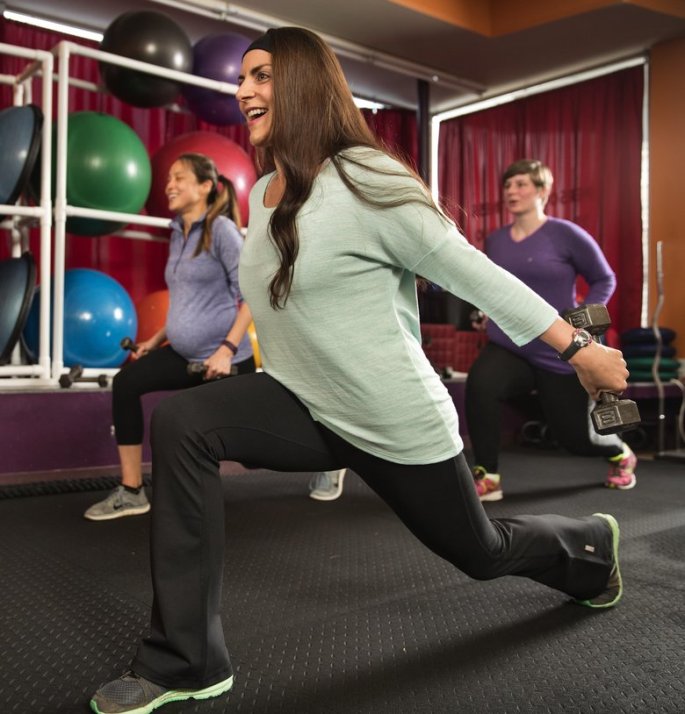
So, what does interval training look like?
- It can take the form of strength training or a low-impact aerobic style intervals.
- A strength training interval might include: body weight squats, stationary lunges or chest presses with a resistance band.
- Aerobic-style intervals might include: marching in place with arms moving up and down overhead, repeated stepping up and down from a low step or moving side to side with swinging arms.
- If this all feels like too much coordination or aerobics just isn’t your thing, intervals can be incorporated into a walk, into lap swimming or work on the elliptical or other piece of cardio equipment. Swimming works particularly well as each lap can feel like an interval, followed by rest at the end. Hills also lends themselves easily to this sort of natural interval work.
- Generally we advise beginning with an equal work to rest ratio; for example, begin with 30 seconds of effortful work followed by 30 seconds of recovery. Repeat up to three times.
- The effortful work initially should be around a level “5” on a scale of 1-10 (10 being your max…which we never approach in pregnancy).
- If this level of effort begins to feel easy, you may increase the ratio of work i.e.: 45 seconds of work to 30 seconds of recovery, perhaps approaching a level 6-7 on the exertion scale.
- As you progress, notice the time it takes you to recover, notice your level of exertion throughout, not exceeding a level 6-7. In other words, you should be able to talk throughout the work.
- Add short bouts of interval training into your routine and focus on the recovery between the work, always returning to your diaphragmatic breath.
- With practice, notice how efficiently your body begins to recover and take great comfort in all of the preparation and your body’s ability to work exactly as designed.
Remember, intervals are completely versatile and modifiable, so listen to your body with the goal of exercise leaving you feeling energized and never exhausted in pregnancy! Your body is already working quite hard to support the work of pregnancy, so let exercise further fuel that effort, rather than deplete your reserves.
It’s a privilege to do the work we do at Bodies for Birth and such an absolute honor to know that it is making an impact.
No matter where you are in your journey, we will meet you exactly where you are, support you to the best of our abilities and help you to develop strength in mind and body while honoring your unique goals.
Bodies for Birth is much more than physical fitness; it is holistic wellness, and motherhood preparation at its finest, helping you to build strength, confidence and community.
Group classes are now open for all from preconception through postpartum! Visit MindBody to register and please reach out with questions!
Let’s build your village together!
About the Author:
Maura Shirey, RN, CPFE specializes in prenatal and postpartum fitness as the creator and owner of Bodies for Birth. Using current research and evidence-based practices, Maura helps individuals strengthen both mind and body as they prepare for and recover from one of life’s greatest feats! Maura’s wellness background includes work as a Registered Nurse, a Certified Personal Trainer & Chef, as well as a Health Coach & Screener for corporate wellness companies. Maura’s personal experiences, foundational nursing knowledge and passion for fitness and wellness provide the building blocks for Bodies for Birth.
As a woman and mother, Maura seeks to share her personal experiences with the Bodies for Birth community, to break down competitive barriers and to celebrate as clients surprise themselves with the inner strength they already possess. She is dedicated to ongoing education, pursuing best practices and individualizing fitness for each and every person. She is committed to providing a healthy and bold example to her son, Will (who had his own set of dumbbells and began practicing diaphragmatic breathing at 2 years old) and to creating a vibrant and sustainable future for her family doing work that brings her immense joy.

 Heels should be avoided because of the extreme angulation that they place the ankles in- not to mention the positioning of the pelvis while walking. ***Stay tuned for a future blog that discusses the problems with high heels and their health impact***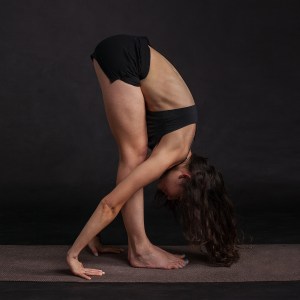





 Paddle boarding is a great way to improve balance. If you have a history of ankle or knee injury, balance work can help to prevent future injuries by improving proprioception (the way your body finds its limbs in space). It is important to check with your health care provider before beginning balance work following injury. For more benefits of Paddle Boarding, check out this
 The time has come! Ditch the spin bike and hit the trails and bike paths. Seattle has so many trails and you are sure to see groups of people on the weekends. Join in. Build your cycling skills and learn to repair your own bike. (Pssst! You can make new friends while you are at it!) Working out with a group helps you to commit to your fitness. They act like accountability partners.



 know if it has been attained?



 Flu season is generally considered to be present from October-February. Many of us have experienced that we are more likely to “catch” a cold during this time of year. Signs pop up for you to “Get Your Flu Shot Here”. (For more info about the flu shot click
 The nervous system and, therefore, spine have a tremendous influence on the function of the immune system. In fact, one study demonstrates that Fighter T Cells work better for 24-48 hours after an adjustment for a review of literature click
  It is recommended that women consume no more than 28g of added sugar, daily. By cutting sugary drinks, like pop and sports drinks, and keeping an eye on your cookie and dessert consumption you can improve your overall health

 Your Chiropractic Home in the Heart of Fremont